Sunday, July 17, 2011

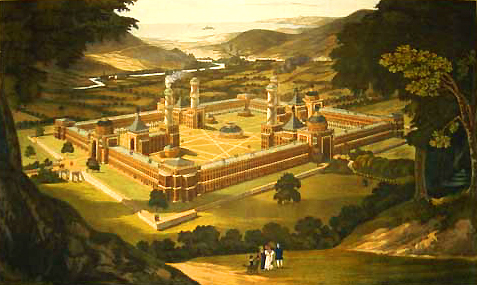
Back to the Future: modern-day utopian strivings for tomorrow

by some forward-thinking anarchists


[We were recently asked to describe our vision for the year 2021, ten years into the future. Here’s our best-case scenario. We're not saying that this is this future is likely. We're presuming there will be no technological singularity, no disclosure about extraterrestrials, and neither a New Age mystical ascension nor doomsday in 2012. This may not be the best nor last such piece we write. It’s not everything we would like, but it’s headed in that direction. If you think you could do better, please write your own and post it.]


A general paradigm shift has emerged over time regarding how people view the nature of humanity itself. People increasingly have moved away from relating based on static labels and moralistic judgements towards instead seeing all human beings as having the same basic and fundamental needs. Increasingly there is also more open acknowledgement that each person is responsible for the choices that they make, that the choices each person makes affects others, and that healthy social relationships are necessary in order to survive. Subsequently there is more of a generalized respect for the autonomy of each person, and for the sake of healthy relationships there is less reliance on coercion, intimidation or manipulation. Because of this, new forms of group facilitation are created and gaining new interest, facilitation that can be said to be more "person-centered", as opposed to the old more "agenda-centered" ways of having conversations and meetings.


With this form of group facilitation gaining popularity as the preferred approach for running formal meetings as well as informal gatherings of people, both the character of organizations as well as for the culture at large begins to change as well. More and more people try to relate with each-other in ways that prioritize empathic understanding, honest self-expression and valuing everyone's well-being. This change is having it's effect on how people address conflict towards more restorative justice and mediation as opposed to the traditional punitive justice. Romantic relationships gradually shift towards becoming more free-form and focused on open and direct dialogue. Parent-child relationships become more non-coercive, creative and cooperative. Family structures become more open, pluralistic and affinity-based. Overall, voluntary cooperation and mutual partnerships are becoming more of the favored mode for social relationships.


Government as we had known it is clearly on the way out. A large majority of people have realized that they were not served by the left/right split which was largely concocted by the rich and powerful to keep the masses divided and fighting among themselves. Dialog and deliberation methods have become popular and Citizens’ Deliberative Councils with randomly selected members are temporarily convened to arrive at consensus about all the contentious issues of the day, producing breakthrough solutions that divisive party politics was never able to achieve. Politicians who once pandered to corporate special interests are now bending over backwards to rubber-stamp the proposals of the Citizens’ Deliberative Councils, lest they lose what little public credibility they have left. A large, growing minority is loudly questioning what we need these politicians for at all, and it looks like the era of representative democracy is drawing to a close, in favor of something much more participatory that works for everybody.


A Truth-and-Reconciliation Commission has been formed in which members of the intelligence establishment, military-industrial complex, Wall Street, and the corporatocracy confess their crimes and publicly discuss their impact on others in exchange for immunity from prosecution. People who've been involved in running corporate and political structures are beginning to talk about their pain, and listen to affected people talk about their pain as well. In awkward fits and jumps, the crypto-fascist regime that has ruled since World War 2 and before is seriously in the process of unraveling in the face of an informed and determined public unwilling to tolerate its continuance. The wars have ended, the foreign military bases have closed down, and returning soldiers have been deprogrammed, rehabilitated, and reintegrated into supportive communities.


Much more food is grown cooperatively and locally where people live. Nowadays pretty much everyone agrees about the importance of local food independence, organic methods, and composting. All genetically engineered seeds have been safely destroyed and replaced with heirloom varieties.


Most people have come to understand the value of unplugging from the mass media and corporate culture. TV, movies, video games, glossy magazines, and pop music only have a shred of their former audience and big mass media companies are going bankrupt. Grass-roots autonomous culture has risen up to replace it, and people who were once made to feel isolated, inadequate, and powerless by the onslaught of advertising and corporate and government propaganda, are now enjoying a new depth of meaning and thrill of empowerment as they begin symbolically representing their own lives and struggles in art and music.


Traditional models of education (both childhood and higher education) are seen are irrelevant and not worth the resources that people used to put towards them. For learning people form informal small groups to study, discuss and experiment together. Occasionally skilled facilitators are sought out to stimulate and guide the interest of these groups to get past problems or stuck spots. Mentorship relationships also flourish between people with more knowledge and experience in given areas and those whom have an interest in learning in that area. When wanting to work in a certain area, people openly talk about what their own personal strengths, weaknesses and interests are without shame, and what they would need to learn in order to effectively carry out the necessary tasks.


Petroleum has begun phasing out of our lives and we’ve risen to the challenge of coping with this shift gracefully. We’ve relocalized our production and drastically simplified our consumption patterns. Fuel rationing is being handled by neighborhood committees, reserving gasoline for the most vital transportation, such as ambulances and moving food. We’re clustering into fewer homes in the winter in order to burn less heating oil. All the nuclear plants have been shut down for the sake of public safety. Wind and solar has made up for some of the shortfall, but mostly we’re making due with less and creatively stretching out what’s left.


The economy has taken an unexpected twist as the GDP and average per capita income has taken a nose dive while surveys of subjective life satisfaction are soaring. Widespread unemployment combined with massive shocks of inflation and deflation has lead the market to distrust money in general, so monetary exchange as a means to get what one wants is falling into disuse, replaced by decentralized volunteer groups coordinating labor and food distribution on an ad-hoc basis. New intentional communities are springing up everywhere as it becomes common knowledge that we need to come together in a spirit of cooperation if we are to survive. Few people have real jobs or income any more, but willing workers voluntarily contribute their talents to the greater good, guided by needs-and-wants bulletin boards and consensus town meetings to set priorities. Consumerism has fallen into ill repute as many have realized that once basic needs are met, materialism produces diminishing returns, and that nothing is more satisfying than pitching in to make one’s community a better place to live for everyone.

Friday, July 15, 2011

Community done intentionally


Ever since I discovered the existence of intentional communities I been a stronge supporter of this way of living and I have known that I want to live in one. For me, the very name says it all - to have community and to do it intentionally. Usually communities come about unintentionally, comprised of whoever happens to be around in a given situation. Things don't have to be that way.

The kind of intentional community that I have always been in favor of is the structure of an income-sharing commune, where people both live and work there and where everything that it's members need is provided for by the community itself. This way of living is a part of my ideal for a future society, and it is possible to implement in small-scale forms right now.

This is a very close-knit way of living, people are all up in each-other's business all the time, and frequent meetings are necessary in order to navigate through all of the matters that are affecting everyone. Despite all of this, I say that it is worth it. For one, social needs are met through this model, such as meaningful interactions with others and belonging to something greater than one's self. Also, people always affect each-other all the time regardless of which social models and structures they live within, so having an intentional community structure in place simply provides a way for people to come together to openly talk about this. Pretending that webs of inter-relation and interdependence do not exist makes social fragmentation so much easier to occur.

More importantly, the intentional community format, in particular an income-sharing commune, provides a clear and explicit basis for mutual support. Instead of each individual being left on their own, or even each couple or family being on their own, you have a whole group of people (which includes individuals, couples and families) who are working together to ensure the well-being of everyone. Instead of abandoning people to chance, people explicitly have each-others' back and are looking out for one-another. This is an incredibly strong form of social "safety net" or "insurance", stronger even than what is normally thought of with these words, given that what we're referring to here are people whom one lives with and sees and interacts with every day. Paperwork and relationships of buying and selling can not even compare to that.

The Camphill model for intentional communities intrigues and inspires me in particular. This is because Camphill communities take all of the collective strength and wealth that are created by the pooling together of resources into an income-sharing intentional community and uses that to support people who are in need of special care. I like this, because it ensures that nobody is overlooked, that nobody is left out. On top of that, Camphill adds a dimension of awareness of spirituality and mindfulness that does much to enrich the quality of life that one can experience in community.

What originally inspired me to write this here is my reading of a recent blog post by a friend of mine. The post is The Problem of Sociability. I agree with what he says there about social fragmentation, and the investment of time, space and people as the way to remedy that. In particular these three sentences stand out to me:

"I have seen in Europe that the strongest political groups begin with groups of friends whose political life looks like a daily life that includes each other. This looks like intentional living and daily meetups in public space. In the US we are together, as radical subjects, only as long as our shared living space or clubhouse lasts and no longer."

Based on this, I then think about Camphill Village Copake, where I am currently visiting. This is a place that is an income-sharing intentional community that this up-coming September will be celebrating 50 years of being at this location. However, it started out as a group of friends who previously knew each-other, spent a lot of time together and were committed to this project regardless of what specific physical space was available. This kind of investment, I believe, helped to make this project such a long-lasting endeavor.

The thing is, Camphill communities are not really a "political" project in any way, which is something that I am OK with. Perhaps this is something that reflects my own tendency towards the kind of "puritanism" way (as spoken of as a "wrong" approach in that previously-mentioned blog post) in which I have approached radical leftist politics. At the same time, I am a strong believer in the need to integrate "personal" and "political" work together, as I have talked about here previously. This leads me to wonder how "political" a person I really am, even though I believe that our world needs to radically be changed top to bottom, and every which way.

One project that I have been following recently is Shut Down Rise Up, based in Minneapolis in response to the recent "government shut-down" there in Minnesota. This project, in my eyes, is an attempt to create more "intentionality" and mutual support among pre-existing communities of people. This project also can very easily be said to be a "political" project. The problem with this kind of thing, however, is that when the specified time elapses people then relapse back into "unintentionality" and isolation. Structures need to exist more permanently, more ongoingly.

My ideal situation would be that of combining all of these different elements: income-sharing intentional community, supporting people in need of special care, recognizing & appreciating the spiritual aspects of life, integrating "inner" work and personal change with more "outer" social change, and, at the same time, making efforts to invite the general public to learn more about and participate in ways to create mutual aid, local self-sufficiency and intentional living.

I am at a place in my life now where I feel like I have a lot from my own past experience to draw from, while at the same time I am unwilling and unable to create the kind of life and projects that I want to engage in on my own. I am looking for comrades, networks and social structures that are in alignment with all of these things that I am wanting. At the same time, my suspicion is that what I am wanting is not all the different, on a fundamental level, from what most people are wanting. The question is to navigate through all of the particulars, and to talk about what we want consciously. This is something that we can choose to do together.

Friday, March 25, 2011

Reflections on a Buddhist Anarchism


I suppose that all of this basically comes down to a deep dissatisfaction with life and the world that we live in. After years of grappling with this, trying on different approaches, lifestyles, ideologies, drugs, traveling, I now have come to see this world and my life in it in a particular way. My well-being, and the well-being of everyone in the world, basically comes down to our own choices that we make. Our choices have consequences. We can be happier, healthier, and live more fulfilling lives if we learn how to make wiser more skillful choices. This is what I call Buddhist anarchism.

What’s in a name


Writing all of this I have a concern that I am merely contributing another label, another –ism, another ideology to a world that is already saturated with these. I do not want to add another set of words and ideas to fight over, but rather I want to tie together some historical streams of thought and practice that I believe can be quite beneficial and mutually reinforcing.

When I say “anarchism” what I’m referring to is a social philosophy based on an understanding that leads away from domination, top-down hierarchy and coercion, as exemplified by institutions such as capitalism and the state, and towards greater social freedom, voluntary cooperation and sharing of resources. Two slogans best summarize this worldview: "No gods, no masters" and "liberty, equality, fraternity".

Buddhism to me is a philosophy of the mind based on an understanding that leads away from delusional thinking, attachment or trying to hide, and instead leads towards greater ethical conduct, control over one's mind, and experiential insight. The phrase that best summarizes this worldview is: "Discern what helps; refrain from harm; purify your mind."

Both of these philosophies emphasize a profound sense of freedom, community with others and with life in general, and a sincere goodwill being the motivating force behind people supporting each-other. I believe that both of these approaches are necessary in order for us to have real, meaningful and lasting change in this world.

The Buddha once said “even ignorant people look for a pathway to reality. But, searching for it, they often misunderstand what they encounter. They pursue names and categories instead of going beyond the name to that which is real.” My goal in writing all of this is to hopefully provide a few more useful guide-posts in the ongoing search for that which is really real in our world.

No separation from the personal and the political


Anarchists have long said that the "personal is political", that dynamics of authority and domination manifest themselves within interpersonal relationships and mindsets as well as in the larger institutions of our society. As a result, the choices and actions carried out within one’s life in relationship with others has been viewed by anarchists as being just as important an area to focus one's attention on as capitalism and the state at large. As the German anarchist Gustav Landauer put it, "the state is a relationship between human beings, a way by which people relate to one another. One destroys it by entering into other relationships, by behaving differently”.

Buddhist belief holds that there is no real separation between an individual person and other people, and the rest of life, around them. The idea is that our very nature is so inextricably tied together, so bound by various processes of cause and effect occurring between us, that there is no meaningful way to draw a boundary from where a person begins and ends. To quote the famous anarchist Mikhail Bakunin, “Man becomes conscious of himself and his humanity only in society and only by the collective action of the whole society".

This is one of the core ideas behind Buddhism, the concept of "no self", or “anatta”. One is to have compassion and kindness towards all sentient beings because, to use an anarcho-syndicalist phrase, "an injury to one is an injury to all".

Coming out of this understanding of "no self", there is the Mahāyāna Buddhist ideal of the "Boddhisattva". This ideal is such that the individual who chooses to go down this path does not achieve Enlightenment until all sentient beings achieve it first. A similar sentiment was expressed by Mikhail Bakunin when he said "I am truly free only when all human beings, men and women, are equally free."

Accepting the Path


The end goal for all of this is Enlightenment and a utopian society. Enlightenment would be when one is fully aware, at peace and free from all suffering. The utopian society in question would be where the world has no more relationships of hierarchy and domination, and all human activity is carried out freely, as equals, and all collective decisions and resources are shared together in common. Both ideals can seem distant and unattainable, but the path towards attaining these goals is in itself fulfilling, in both regards.

The Buddhist path is comprised of three aspects: ethical behavior, control of one's mind, and experiential insight. Ethical behavior includes things like refraining from telling lies, stealing, killing, taking intoxicants, sexual misconduct, or in any other way harming people. This is not to be viewed as a kind of moralistic list of "do's and don'ts" to use to judge people, but rather as a kind of guiding framework that one can choose to adopt for one's life to aid in creating more personal stability and grounding from which to work from.

Controlling one's mind comes about as a result of a regular ongoing practice of meditation. Ordinarily our own mind is scattershot, fragmented, jumping around from topic to topic, and in many cases it is actively working against us. Very often we do not even know our own mind, let alone control what it does and where it goes. Various forms of meditation practice exist in the world, and simply by choosing one or a few of them and sticking with them as a regular ongoing personal practice, eventually one's mind will find greater clarity, coherence and sensibility.

Experiential insight comes about when one knows something not merely in an intellectual or abstract way, but because one has had direct personal experience with it. Through your experience, insight occurs. This is not merely a mental occurrence of conjuring up a memory of something, but a kind of bodily-felt experience where that which you know is felt and understood directly. This kind of thing can never be told from one person to another, each person has to come to it themself. Words that are spoken about this can at best be a guide towards personally coming to this kind of experiential insight. Unfortunately words can often be a distraction away from this as well.

The anarchist path towards social revolution could also be characterized as having three aspects: direct action, self-organization, and prefigurative politics. Direct action means doing something without asking for permission or waiting for an official stamp of approval. This is related to the goal of coming out of authority-based ruler/subject relationships, and instead finding one's own personal power to take action directly one's self without being told what to do.

Self-organization means that groups of people who do something together also have the role of organizing that activity together as well. Instead of having one group of people doing an activity, and another group of people doing the organizing work and decision-making for that activity, everything is all carried out by the same group of people. Where direct action can be viewed as people finding their own personal power, self-organization can be viewed as groups of people finding their own power together as a group.

Prefigurative politics means that the activities carried out and the ways of organizing and relating within them all reflect the kind of society that one wants to live in. This is in effect eliminating the separation of "means" and "ends", or as Gandhi put it, to "be the change which you want to see in the world". In practice this would mean establishing and spreading various social systems and structures to meet people's needs within our current society. Whether these needs are for food, shelter, clothing, transportation, sanitation, medical care, child care, education or skill-building, all of people’s needs can be met through social means that are cooperative, voluntary, egalitarian and free.

The point with all of this is to not get tripped up by focusing too much on the end goals – personal Enlightenment and a utopian society. The goals are wonderful, but we are living our lives in the here-and-now. Therefore more focus should be placed on walking the path to these goals, because that is where we are now, taking one step at a time. When done right, each step on the path towards these goals are fulfilling in and of themselves, regardless of when and if we get there. This is all about improving our lives, personally and socially, and the process in itself is worth the effort.


Taking Responsibility


In common with both Buddhism and anarchism is the whole notion that one ought to take responsibility for one's own life. With anarchism, there is a change of social structures and relationships towards recognizing and respecting each person's ability to make their own choices for their own life. With Buddhism there is a kind of investigative search towards locating one's core sense of choice, and from there consciously deciding upon one's own actions, words spoken, and even the thoughts that are held in mind. The psychologist Victor Frankl expressed the later sentiment well when he said: "Between stimulus and response there is a space. In that space is our power to choose our response. In our response lies our growth and our freedom."

In a way, these two approaches towards looking at individuals taking responsibility for their own lives are two sides of the same coin. The anarchist approach is "from the outside-in", meaning that it focuses on how the community, the social structures and the relationships that a person is surrounded with can best acknowledge and support the individual in taking responsibility. The Buddhist approach is "from the inside-out" in that it focuses on the sense of choice coming from within an individual and extending outwards towards one's thoughts, onto one's words, and finally expressing itself in one's actions.

To have a Buddhist anarchist approach would be to acknowledge and support each-other in making our own choices and decisions, to make decisions collectively and cooperatively when they pertain to group or community matters, and to always keep in mind that we can and should continue to develop greater wisdom, maturity and skill in the choices that we make.

Developing good qualities


“Abstain from all unwholesome deeds,
perform wholesome ones,
purify your mind -
this is the teaching of the Buddhas.”
- from the Dhammapada

At various points over the years that I have considered myself to be an “anarchist” I have felt discouraged, disillusioned and disappointed with the words and actions coming from different people who also consider themselves to be “anarchists”. These behaviors have ranged from very hurtful things that are written or spoken to one-another, to petty theft, lifestyles emphasizing intoxication, sexual assault, and other forms of violence. I have been astounded by this behavior, and at times have wondered if I really belong to the “anarchist community”, given that these kinds of behavior are not what I associate with anarchist values or the kind of utopian society that I want to live in. In other words, this is not what I signed up for.

Then I think about my own life, and how I myself have done various things that I regret and am not proud of. I remember how within my own mind when I was carrying out those actions, I felt quite agitated, confused, and in turmoil. My mind was not clear, composed and at peace with itself when I did those things. I recall the Buddha’s exhortations to “purify your mind”, and I think – what a remarkable difference that would have made in terms of providing the foundation for different, more beneficial actions to take place.

What strikes me about Buddhism is how seamlessly integrated the whole process is. The ethical framework that is provided is directly related to the mastery of one’s own mind, which is also related to developing one’s ability for concentration. Seen from this perspective, it is not surprising that such behaviors are found in the anarchist community, or other communities of people, because the perspective of the whole person is missing, as is the explicit commitment to positively developing one’s capacities.

A commitment to personal growth


I believe that the more one is genuinely committed to improving one’s self, developing inner strength and mastering one’s own mind, the more one is in a better position to contribute towards meaningful social change. The Sufi writer Idries Shah put it well when he said:

"The individual, and groupings of people, have to learn that they cannot reform society in reality, nor deal with others as reasonable people, unless the individual has learned to locate and allow for the various patterns of coercive institutions, formal and also informal, which rule him. No matter what his reason says, he will always relapse into obedience to the coercive agency while its pattern is with him."

In other words, we often produce and reproduce relationships of domination, authority and submission without even realizing that that is what we are doing. We are so accustomed and conditioned to these ways of being that we often are not even aware that they are happening. Cultivating greater self-awareness in the present moment can aid us in noticing this taking place. Buddhism provides various tools to assist in this. A real personal commitment to doing the ongoing necessary inner work of developing in these areas has to be present; otherwise “anarchy” would end up being the kind of nightmare situation that people usually associate with that term.

Intoxication and seeing clearly


Within countless anarchist circles I have come across there are problems that exist with drugs and alcohol. A lot of the time the using of drugs or alcohol is one of the factors contributing to instances of sexual assault and other forms of violence, as well as unnecessary run-ins with law enforcement. Overall the time, energy and money spent on the procurement, consumption and dealing with the after-effects of intoxication within the anarchist scene seems to me to be something that could be more productively put in other places.

From the Buddhist perspective of developing greater self-control, mastery of one’s mind and concentration, the act of getting intoxicated pretty much defeats the purpose. One of the goals with Buddhism is to see reality as it is, without delusions and confusion. The adding of the element of intoxication is contributing one more unnecessary barrier to achieving this desired clarity.

Part of seeing reality clearly also involves facing directly the reality that exists inside of you. This means not hiding from that which is unpleasant, and not craving that which is pleasant. Intoxication is a way to induce pleasant experiences, and to escape unpleasant ones. The more time that one spends with one’s self, directly and unobstructed, the more one eventually finds personal acceptance and comfort with one’s true nature.

Related to the anarchist punk rock scene there is “straight edge” (or “sXe” for short), a movement of people who abstain from drugs and alcohol. These folks have already elaborated on the draw-backs to intoxication, particularly as it relates to the effective carrying out of social change work. Many straight edge people tie their abstinence to their religious or spiritual beliefs, the most notable of which being Christianity and Hare Krishna. I would say that Buddhist anarchism would also have ties to straight edge (as well as “posi-core”, given the focus on positive values).

Selfless service


Turning the focus now from one’s self towards others (to the extent that there is a distinction between the two), I will say that one of the important aspects within Buddhism that has most struck a chord with me is what has been referred to as “dhamma service”, or “dharma service”. This is the voluntary giving of service for the benefit of others without expecting anything in return. This is to be done out of a spirit of love, compassion and generosity, with a sincere wish for the peace and happiness of those you’re serving. I have found this to be a very personally rewarding experience, which is ironic given that this activity is done out of a spirit of focusing on serving others, not yourself. That this kind of experience would be personally fulfilling makes the “giving” in fact be a kind of “receiving”. (To me this is an example that high-lights the principle of “anatta” or “no self”)

In the world of activism, the profession of those who want to change the world, I have been struck by the amount of anger that exists towards other people. I believe that this stems from a mindset of wanting to change other people. I do not see that perspective as going anywhere. Because when it comes down to it, each person is responsible for changing themselves, for determining their own future through their own actions. The mindset that I instead would like to use when approaching matters of social change is not the “activist” mentality, but rather that of selflessly serving others – dharma service.

The simplicity of giving


Another aspect of Buddhism, related to dharma service, is something called dāna. This is generosity and giving without any strings attached. It is giving simply to give, for the benefit of others. In societies that have an old history of institutionalized Buddhism, this virtue has enabled the profession of Buddhist monks and nuns to exist and be sustained over centuries. Because of people regularly giving to monks and nuns, they end up living more simple and austere lives themselves, in addition to the monks and nuns who live with very little material things to begin with. This results in a more simple life all around.

Within the anarchist sub-culture I have noticed a similar dynamic taking place. Anarchists regularly give and offer what little resources they do have to others, to comrades in need, projects worthy of support, and people who are in legal trouble. A culture of selfless giving is often the case within anarchist circles, and this often goes unacknowledged. I find this to be a very beautiful thing and something worthy of praise.

The delusion of ownership


Related to this notion of giving, I would like to propose another idea – that nobody really owns anything to begin with. In contrast to this, I would say that things exist, they move around and change, and eventually they go away. That’s the extent of it. The moment that the identification with a material object takes place, that the concept of “mine” enters the picture; the stage is then set for suffering to occur (and for systems of institutionalized domination, such as capitalism, to eventually come about).

From the Buddhist perspective, suffering comes about from craving things, from trying to avoid things, and from delusional thinking. To me, the concept of ownership has the seeds for all three within it. The craving part seems obvious – “I want what belongs to me”. The avoidance is evident in that there are certain thoughts and feelings that one is trying to escape confronting. In other words, what exactly will be there when you have “nothing” to hide behind? What are you left with when you do not have your stuff?

The delusion of ownership is evident in that the material objects that one considers to be their “property” inevitably breaks, get lost, or stolen. These material things are usually not physically attached to one’s body, so in a way they have a life of their own and wind up wherever. To consider material objects “yours” does not match reality, because they will go wherever they go, irrespective of your wishes. To think otherwise is to invite suffering.

The delusion of controlling others


Similar and related to the idea of controlling material objects is the idea of controlling other people. People will do whatever it is that they do, and to think otherwise is to invite suffering. Offering of suggestions, advice and support can be made to people, that is different from attempting to control. However it must always be kept in mind that in the end it is up to each individual to take it upon themselves to change in a more positive direction, if that is what they want.

To try to control people is to set one’s self up for disappointment - by the other people not following through, not fulfilling the vision that was anticipated,by resisting or rebelling, or by holding a resentment that will show itself as retaliation in some future time. Real peace of mind is neither present in the person in the position of being the controller nor in the person being controlled. To find peace of mind one needs to create social harmony, which means establishing cooperation between people as equals; always with an understanding that everything is impermanent, that change is a constant.

Practicing Nonviolence


As I see it, a common goal that both anarchism and Buddhism have is fostering social harmony. To foster social harmony there has to be nonviolence. This means actively making the choice to not harm others, even in the face of injustice and aggression. Instead of retaliation and harm, one seeks to support understanding, empathy and love. In order to maintain an active nonviolence, it is important that one remain clear about one’s values, authenticity, and to openly expresses these.

There are traditions within both Buddhism and anarchism of nonviolence; although nonviolence is not exclusively practiced within either one. To have a Buddhist anarchism, I believe that nonviolence needs to be a unifying principle - given that nonviolence emphasizes that a goal in common to all of this is real peace. Both personally and socially speaking, peace is what we seek. It is important that we remain as consistently in integrity with these values as possible, every step of the way.

Extending the Love


Common to both anarchism and Buddhism is vegetarianism (although this is not always the case). This is usually done for the same reason for both – an ethical conviction that it is wrong to kill animals for our own consumption. When striving to extend our compassion and care to others, no line is drawn between humans and animals. Animals can feel both joy and pain, hence they are seen as worthy of our concern and consideration when deciding on the kind of lifestyle we want to live and the kind of world that we seek to create. For this reason, Buddhist anarchism would include having a vegan, plant-based diet.

Nonviolence within Buddhism, and dharma service and dāna/generosity in general, all come out of a particular state of mind (or rather, a quality of heart). This is called “metta”, which means “loving-kindness”. This is a real opening of the heart, a loving no matter what, a sincere wishing of the best of everyone. The ideal is to have this quality be the motivating force behind all of the actions that one does in the world. Various meditative practices exist within Buddhism to help with developing metta. Having the ability to bring about sincere loving-kindness throughout one’s activities of daily life is tied together with cultivating personal happiness in life.

Compassionate communication


Coming out of a sense of both nonviolence and loving-kindness is a related practice that does not necessarily originate from either anarchism or Buddhism per se, but which I believe is essential for a real living Buddhist anarchism nonetheless. I am referring here to compassionate communication, also known as “Nonviolent Communication” or “NVC”. Briefly put, this is a system of tools to help people to communicate with more empathy, personal authenticity and caring, as well as translating judgements of people into a deep understanding of what is actually taking place. Compassionate communication is practicing in listening, with expressing, and also in terms of one’s own thinking. It is a tool to be used when addressing conflict situations, as well as a kind of “talking meditation” that can be used in the interactions of daily life.

I see compassionate communication as being a great tool to help one in practicing what in Buddhism is called “Right Speech”, which is a part of the “Noble Eightfold Path” towards the liberation from suffering. Within anarchist circles, I have seen countless projects, relationships and gatherings of people break down because of communication difficulties and how conflict is dealt with. This is an area where I believe some real skill-building is needed. Learning compassionate communication is one way to pursue building these skills.

Small is beautiful


Within Buddhism the goal is for one to live a life characterized by the renunciation of material things, making a living through ethical means, being moderate in one’s eating, and having patience, hard work and equanimity. Within the anarchist ideal of a utopian society, production and consumption would take place in a decentralized way through local small-scale face-to-face communities of people. The goal is to have everybody being nourished by local organically-grown food where everyone knows the people who grew it and the land that it was grown on.

These two goals to me seem to fit together like hand-in-glove. Taken altogether, one would live a simple small-scale life, hard-working and modest, living together with others whom you know, make decisions and share with. This is a goal which one does not need to wait for a distant future to achieve; this is attainable in our lives right now.

New kinds of social organization


Within the community of Buddhist practitioners, particularly the monks and nuns, the Buddha gave specific suggestions for how the organization of this community could best be carried out. The term for the community of practitioners is “sangha”, and here are two quotes that are particularly relevant when considering a Buddhist anarchism. These come from the book “An End to Suffering: The Buddha in the World” by Pankaj Mishra:

“The Buddha was confident that ‘as long as the monks hold frequent and full assemblies the sangha will prosper, and not decline’. He did not think of himself as leading the sangha. Nor did he encourage any of his disciples to assume the burden after his death. He saw consensus as of the utmost importance to the life of the sangha. The Buddha also stressed the need for each local sangha to remain united. He allowed for differences of opinion, but he did not wish them to undermine the structural unity of a sangha and vitiate the experience of everyday life. Controversy, whenever it arose, could be settled by the method of the dissenting individuals removing themselves and forming a new group.”

This reflects a number of anarchist values, namely, that of including everyone’s voice and allowing for each person to have their own opinion, prioritizing a group consensus process, and ultimately making room for group self-determination and free association.

Mishra then goes on:

“The Buddha encouraged individual monks to become exemplars for the society of laymen; he may even have wished the organization of the sangha to become a model of a higher politics and morality. With its rules and its respect for consensus and tradition, the sangha does seem a prototype for the close-knit political organization – something that could conceivably serve as an alternative to the unmanageably large states in which two new human categories were coming into being; the rulers and the ruled.”

This then brings up an intriguing question – what could a Buddhist anarchist sangha look like? In our current era of digital technologies, globalization, and ecological crises, where the social categories of rulers and ruled have existed for quite some time now, how can we create an anarchist sangha that realistically addresses the needs of people where they are at? I feel that both the traditions of anarchism and Buddhism have a lot to offer in terms of beginning to answer these questions. However, in the end it is up to us and our own ingenuity and effort to come up with some answers.

Step by step


Both anarchism and Buddhism offer unique ways to look at the world to dispel all of the illusions that are cast around it - to see life as it really is. The reality is that we are all deeply enmeshed in different kinds of power relationships. This results in some people being placed on top of a social pyramid as a privileged ruling class, while most people are simply following the orders and expectations that are handed down to them from above. These relationships are created and reproduced by the choices and actions that we take, both internally and externally. We are ultimately responsible for our own suffering, both personally and socially. This suffering is ultimately unnecessary. We can find liberation from all of this.

To find true liberation, we need to face the reality that is before us without any illusions. We need to take full responsibility for our own lives. If we see and acknowledge that we are inextricably connected with one-another, and determine that we want to work together to create different kinds of relationships for a radically different kind of world, then we must learn how to communicate, share, and love without any reservations. Doing all of this takes practice. This is an ongoing process of development, and luckily the various tools that can aid us on our way are already before us. As a famous monk once said:

“Liberation is the inevitable fruit of the path and is bound to blossom forth when there is steady and persistent practice. The only requirements for reaching the final goal are two: to start and to continue.”

Further resources


There are various websites, people and organizations who are out in the world doing things of a Buddhist anarchist nature. Here are few:

Buddhist punks


Against the Stream Meditation Society: http://www.againstthestream.org/
Hardcore Zen: http://hardcorezen.blogspot.com/
Dharma Punx: http://www.dharmapunx.com/

Buddhist social change stuff

Buddhist Peace Fellowship: http://www.bpf.org/
International Network of Engaged Buddhists: http://www.inebnetwork.org/
Zen Peacemakers: http://www.zenpeacemakers.org/

Learning Buddhism


D.I.Y. Dharma: http://diydharma.org/
Vipassana Meditation: http://www.dhamma.org/

Secular Buddhists

The Secular Buddhist: http://www.thesecularbuddhist.com/
Confession of a Buddhist Atheist: http://www.stephenbatchelor.org/book-confession.html

Compassionate Communication


The Center for Nonviolent Communication: http://www.cnvc.org/
Consciousness Transformation Community: http://ctc.learnnvc.org/

Friday, March 11, 2011

Thinking Green


In a way, I have been following what's been going on in Libya ever since when I was a little boy in 1986 and Ronald Reagan decided to bomb them. I remember that incident vividly, my parents' shocked and horrified reactions, and I recall taking out a globe that I had at the time and marking it with a big black permanent marker on the two places that were bombed by U.S. forces - the cities of Tripoli and Benghazi.

I was intrigued as well by the figure of Muammar al-Gaddafi, the leader-dictator of Libya. Something about him has always struck me as being a tragic and fascinating person. This interest only increased around 1996 when I became an anarchist and soon came across a copy of Gaddafi's Green Book during my lustful pursuit of anything radical in writing. I was fascinated by his theory of "Jamahiriya" that he laid out, and how it so much resembled an anarchist utopian society in it's description.

Then the question came up - how could Gaddafi have such a beautiful vision of a stateless society, organized along directly democratic lines, and the reality of the place actually be an authoritarian state with Gaddafi as the dictator-in-chief?

It wasn't until a number of years and many life-experiences later, particularly with Malik Rahim and Common Ground Relief in New Orleans and Marshall Rosenberg and the Nonviolent Communication movement worldwide, that I saw how this sort of thing can take place. Briefly put, the charismatic leader guy gets detached from the on-the-ground reality, is surrounded by Yes Men, and becomes totally caught up in their idealistic fantasy world to such a degree that that is actually what they believe is taking place in the real world. I've done that before myself, except that I've never been a charismatic leader guy, nor the head of a state.

So along comes the current Libyan uprising, and I find myself transfixed, checking the internet multiple times a day to see what developments are taking place in that situation. I also find myself wishing that the rebels win the conflict, sometimes rooting for them like one would for a favored sports team, at times even wishing that I was out there with them fighting these battles at their side. The irony, of course, is that the rebels generally are wanting a traditional representative democracy state, and that Gaddafi's vision, at least on paper, is actually more in alignment with my own.

Then, stepping back, one realizes something - the situation in Libya is getting the kind of attention that it is primarily because of it's oil industry. If the oil wasn't there, we simply wouldn't be hearing about Libya, autocracy or not. The petroleum industry in Libya is integrally connected to the global economy, as the recent rise in gas prices shows. Furthermore, the relative wealth that exists in Libya, the same money that is funding the current fighting there, all comes from money that originates from the Libyan petroleum industry. Suddenly the whole thing looks very dirty to me.

Petroleum, which quite literally fuels so much of global industrial capitalism, and which is also such a major contributor to global climate change, is also something of an inherently limited supply. Quite simply this whole situation can't and shouldn't go on - for the sake of the continued life on this planet. To have a society, be it an authoritarian dictatorship, a representative democracy, or an actual directly democratic stateless society, based upon the petroleum industry, seems to me to make the whole thing fundamentally flawed. It's not socially responsible, it's not ecologically considerate, and it's not sustainable. (The Post Carbon Institute has done some good thinking on this subject)

Then there's the human relations aspect of the whole situation - I firmly believe that if you base a social relationship, or a society, upon coercion, force or violence, then that right away invalidates the whole thing at the outset. If people are "made to" do something then they are captives to it, as opposed to collaborators for it. That kind of situation does not seem worthwhile to me. It isn't sustainable either, because once one side finds a way to do it, they will retaliate or sabotage the whole thing. As long as one side is a loser or is somehow suppressed by another, then the basis is there for the whole thing to be upset by them once they find the will and ability to do so.

Recently I read the book An End to Suffering: the Buddha in the World by Pankaj Mishra, which I appreciated a great deal for it's look at history, politics, sociology and psychology from a Buddhist-oriented perspective. This one part towards the end of the book stood out to me, particularly in relation to the current fighting taking place in Libya:

"Ideology - democracy, freedom, Islamic virtue - gave them the moral certainty with which they spoke of the necessity of violence for remaking the world. It made them assume, almost as a matter of course - reverting on a terrible scale to the bloody rituals of tribal societies - that some must die so that others can live and be happy and free.

Given their immense power to manipulate and coerce, it was easy to see individuals everywhere reduced to spare parts of an imaginary humanity. But there was something missing in this bleak, compelling vision of individuals delivered to vast blind forces.

It was what I began to see more clearly... what the Buddha had stressed to the helpless people caught in the chaos of his own time: how the mind, where desire, hatred and delusion run rampant, creating the glories and defeats of the past as well as the hopes for the future, and the possibility for endless suffering, is also the place - the only one - where human beings can have full control over their lives.

The mind is where the frenzy of history arises, the confusion of concepts and actions with unpredictable consequences. It is also where these concepts are revealed as fragile and arbitrary constructions, as essentially empty. What seems like necessity weakens in the mind's self-knowledge, and real freedom becomes tangible."


So, what is needed for Libya (and the world at large, too)? Well, that is not being discussed in the news reports and analysis that are coming out about the situation there. To me, what is needed is a change on all levels - political as well as psychological, economic as well as ecological, social as well as sincere self-reflection. The effort, creativity and perseverance needed for this kind of change would be immense. It seems like now the time for this has come.

Friday, February 11, 2011

Anarchy, again.

I realize that I'm still an anarchist. In fact, I've always been one, ever since I first came across the philosophy.

For those of you who are not familiar with this line of thinking, what I mean to say is - I don't want capitalism, property, government, politics, bureaucracy and all of the top-down hierarchy, domination, alienation and coercion that makes those things happen. I see all "politicians" as being fundamentally the same - people acting out spectacular and limiting social roles. I see "bosses/workers" as being a tragic & unfortunate social relationship, and I see "prisons" as being absolutely reprehensible and disgusting. Price-tags, permits and police are unnecessary as well.

I want to live in a fundamentally different world where people are true equals with each-other, where people are free to make their own decisions for their own lives without underling unspoken threats hanging over them, and where collective group or community decisions are made together and all material things are shared in common without arbitrary hang-ups about "mine" and "yours", "us" and "them", etc. And I want this kind of world as soon as possible, because our very lives depend upon it.

This is a very radical stance to take, and one that exists far outside most of the world-views that are in circulation. It is often not the kind of thing that one talks about in polite company. I am entirely aware that this new world may never happen, and at the very least it may never happen in my life-time.

Part of the kind of change that I have been moving towards in recent years, a change to a new kind of "realism" you might say, is that I have been coming to terms with the fact that my ideals and dreams for a new utopian society may never happen, that all attempts at it may end in dismal failure, and that humanity and life on earth in general may all die a painful and complete extinction due to the actions & non-actions of governments, corporations, and industrial civilization everywhere. This is simply the world we were born into.

The trick is to come to realize this, accept this, and to really be OK with it. In other words, it's not the end of the world if it's the end of the world. The dream and values underlining an anarchist world-view are worth it even if it does not come to be, and that it is better to see the world as it is now, to call a spade a spade, to see tyranny as tyranny, regardless of what comes of it.

In other words, part of my personal struggle has been to find a way for me to approach all of this in a way that is really balanced, grounded, and healthy. In the past, I threw myself entirely into the "anarchist" thing, I built up my whole identity around it, and I bet everything upon the coming collapse/revolution/insurrection/what-have-you. I see now that one can hold ideas & ideals about the world, society, and social change, as well as about health, well-being, and living a good life. I see that one can have this world-view, and not necessarily have to surround one's self with others who also have this world-view, or to rely upon this world-view as a way to meet one's social needs in general. I also see the value and importance of having a personal religious or spiritual practice in one's life as well.

For me, one thing that I have gradually over time been developing and getting more interested in, and ultimately have been seeing inform & reinvigorate my anarchist views as well, is the philosophy & practice of Buddhism. Buddhism is something that I see as being a kind of ethical, psychological, and spiritual approach to life. The moments when I remember and strive to carry out the kind of things that Buddhism speaks to are moments in which I experience greater peace, balance, and positivity inside myself. I eventually would like to develop more of an explicit "Buddhist Anarchist" philosophy, but this is something that I want to treat with great care and not to rush.

At the same time as all of this taking place within me, many miles away from me in Egypt all kinds of different political unrest and uprisings have been taking place. I have been very much fascinated and enthusiastic about what has been going on there. At most I see that there is a situation where the people present having been finding & realizing more of a sense of their own personal power, collective power, and their ability to change things. I see this as a situation where people realize that they can mobilize and act without fear. It is precisely this kind of spirit that I see the philosophy of anarchism as pointing towards, and relying upon.

If the people there were to take the next step and to start occupying and running the farms, factories and distribution-points throughout the country, that would be a step towards an anarchist revolution. If the people there were simply to realize that they do not need official people in high-ranking positions of power to say any particular thing in order for them to be "free" or "democratic", that they could just do it all themselves, then that too would be another step towards an anarchist revolution. Because the revolution there is basically political in nature, and because the people there are waiting for official decrees of change to come down from above, this inherently makes the change there very limited in scope. Nonetheless, I see that what is going on there as being something that is far more meaningful and exciting than anything that is going on in the public sphere of my own country.

There is a connection too between what is going on in Egypt and my own renewed interest in anarchism. It is this: I am seeing in Egypt that it is indeed possible for people in this modern/post-modern world to be able to rise up and have a sense of their own power together independent of official sanction and without the leadership or direction of any central figure or organization. In other words, people still have the ability to break free, even today. This is something that I lost a sense of, that I lost hope for, because of years of disappointment, defeat and heart-break. I see now that a far-reaching social revolution can still happen, not necessarily that it will happen, but that the potential is still there. This is kindling for the fire to stay alive.

Thursday, December 30, 2010

Walking Through the Valley: Personal reflections on 2010


Carrying on a personal tradition that I have been doing for years now, here is a reflection on my own experience of the year that just ended, 2010.

Similar to last year, 2009, this was a year that I spent the entirety of living and working in one place - Camphill Soltane in southeastern Pennsylvania. I've been in a romantic relationship with one person the entire year, and have lived in three different houses at Camphill Soltane throughout the year. So outwardly there has been a lot of stability, but the experience inwardly has been a bit different.

The year has been marked by a kind of ongoing low-intensity inner conflict taking place within me. Most people in my life are probably unaware of this, and folks probably would not think to ask me about anything like this. Nonetheless this has been the main theme for me this year. There are a number of factors behind this.

One aspect is that for me throughout the year various practices, belief systems, and foundation stones for my own sense of identity have gradually been falling away. My sense of profound disillusionment with the philosophy and social scene that clusters around the term "anarchism", continued to grow & develop. This process started last year, and continued on into this year.

My biggest sense of loss and change for me, in this regard, came for me in relation to my no longer considering myself to be an NVC trainer or identifying with "Nonviolent Communication" in general. Similar to the whole "anarchist" thing, "Nonviolent Communication" was a large part of my sense of identity for quite some time. It changed my life, it quite literally moved me, and now I can no longer whole-heartedly endorse it. Ironically enough, the process to become an official certified trainer of Nonviolent Communication officially re-opened this year, just shortly after I decided to distance myself from it.

Another aspect of my ongoing inner conflict this year has to do with what in NVC-land is referred to as my "core jackals". This means my inner judgments and evaluations of myself that are a kind of deep-rooted belief that is wrapped around an emotional pain I've been carrying around with me for some time. This year I found my core jackals coming up again & again, in different forms, often not necessarily even in coherent words.

Because of all of this, as well as because of the general sense of heaviness & seriousness that pervaded the house that I lived in for the first half of the year, I had a pretty difficult time. The turning-point was pretty much half-way through, June 21st to be exact, when it was discovered that one of the people whom I lived and worked with had died in the house that we lived in. This was a blow to all of us who lived there, and it pretty much changed the course for the rest of the year.

The following month, in July, I then decided to join a sort of mutual support community of people with shared values coming out of an NVC background. This group is called the "Consciousness Transformation Community", and so far I have found my involvement with this to be very helpful for me.

The month after that, in August, I traveled to Virginia and re-connected with an intentional community of folks whom I used to live with. That experience was also one that I found to be very nourishing for me.

In September I by chance discovered and read this book entitled Razor-Wire Dharma: A Buddhist Life in Prison by Calvin Malone. That book was by far the most memorable and influential book for me of 2010. One of the effects that that book had was for me to gain an interest in working with men in prison in a Buddhist kind of way. Towards this end I discovered the non-profit organization called "the Prison Dharma Network", which I have since gotten involved with.

That book also re-awakened within me my interest in Buddhism, or the Dharma, and the various practices associated with it. That book reminded me that the times in which I remember and practice the various tenets associated with the Dharma are moments when I feel more at peace and on a productive path in my life. That is where I am left now, as the year is at an end. I realize that the Dharma (or "Dhamma" in the Pali language) is a spiritual/religious path that I have found to be beneficial for me when I walk it. This is something that I would like to commit myself to wherever I find myself in life.

"Even though I walk through the valley of the shadow of death, I will fear no evil, for you are with me; your rod and your staff, they comfort me." - Psalm 23:4

Friday, December 3, 2010

Envisioning a new world


I have long had a vision for how the world we live in can be organized in a very different way than things are now. The way that I have been envisioning this is something that I see as being more respectful and honoring of life in general, and in particular the needs and desires of human beings. I figure that it can be helpful for me to sketch out how I see it as being possible for the world to be arranged. Recently I have been inspired and encouraged by the work that Miki Kashtan has been doing in this area, she has really helped me to breathe new life into my thinking here, and I am delighted to say that I feel a sense of companionship as I elaborate here on what I see as to how a new world could look like. What I say here is a brief outline of this ideal world that I would like to live in.

A needs-based, willingness-based, gift-economy-based social structure

Within this new society people would have different ways of viewing themselves and their actions, different assumptions and understandings about social relationships, different values that are prioritized and emphasized in how they live out in the world, different ways of organizing and coordinating affairs among groups of people, and on top of all this a whole new overall global structure for humanity in general. Without referencing any kind of pre-existing philosophy or ideology, I am simply calling this a “needs-based, willingness-based, gift-economy-based social structure”.

Small-scale face-to-face groups of people

The primary social unit in the new society would be the small-scale face-to-face group of people. This would be a group of no more than ten people altogether, and these groups would be the social basis for the whole social structure. Most of people’s daily lives would center around the various small groups that they are a part of. There would be small groups for people’s work-places, small groups for people’s living arrangements (you could call these “families”, or not), small groups based around people’s shared interests, hobbies, recreational activities, passions, beliefs, what-have-you.

Likewise, when conflicts emerge between people, small groups of people will form to constructively address these conflicts. Small groups would meet to ensure common understanding and to make decisions and come to agreements together. Most importantly, the people within these groups would all feel a sense of authentic heart-felt connection with each-other. This is why I see it as being essential for these groups to be small as well as meeting face-to-face.

Authentic heart-felt connection

The basic social glue for society would be people genuinely caring for each-other and feeling a real sense of belonging, understanding, and appreciation for one-another. Various personal and inter-personal tools exist that can be utilized to facilitate this sense of connection between people. The key thing is that individuals and groups of people routinely check in with themselves to see what the current status is for this sense of connection, since the nature of it all is very fluid and always changing. If people see that the feeling of connection is not there or is weak for some reason, then this will be identified and steps would be taken to restore this connection. Within the small groups special meetings will routinely take place to check-in on the sense of connection within the relationships of the group. These meetings will be separate and distinct from whatever other meetings exist to address more organizational and logistical concerns.

Self-responsibility and willingness

An underlying common understanding within this society would be that each person is ultimately responsible for their own thoughts, feelings, and actions. In other words, each person makes their own choices and decisions about whatever it is that they do, and correspondingly, they each take responsibility for it. Everybody understands that nobody “makes” anybody else do anything – that everything is a choice.

With that all being understood, a second operating assumption also exists, and that is that all interactions and agreements between people take place without coercion and out of a sense of genuine willingness. That is, that people do all that they do because they are willing to, better yet, because they want to, and not out of a sense of pressure, guilt, duty or obligation. Everybody will make an effort to see and appreciate the needs behind everything that they do and will have their own desire to meet these needs be their motivating drive behind the choices that they make.

A needs-based paradigm

One of the basic ideas behind the practice of Nonviolent Communication (“NVC”) is that of seeing the underlying fundamental human needs behind everything that people do or desire. Fundamental needs are distinct from strategies to meet needs because needs are finite and universal to all people everywhere, whereas strategies to meet needs are infinite and specific to particular people and situations. This way of looking at people and actions will be a common underlying paradigm within this new society. Because of this approach, whenever people become aware that they are attached to a particular strategy, they will then take the time to identify and appreciate the needs that are underlying and associated with that strategy. By doing this, space can then be made for more strategies available to meet the different needs at play.

Giving gifts and sharing

Another foundational assumption for this society would be that all of the work that is done in this world, everything that one contributes to others, is done out of the spirit of giving a gift. When one gives a gift one has no attachment or expectation of receiving anything from anybody in return. One gives a gift simply to do something to contribute to the well-being and happiness of others. All giving will be done in this way.

Along with gift giving, a corresponding assumption would be that of sharing and non-possession. In other words, everything would be “ours”, not “mine” and “yours”. When people’s needs for privacy, respect, acknowledgement, ease of access, reliability, or trust (to name a few needs) comes up, then these needs are identified and spoken to others in the relevant groups, and strategies and agreements can be found to meet these needs. All of this would be done out of a sense of everyone’s needs being important, where everybody’s needs are held in common, where resources are available to all to help meet everyone’s needs.

Coordination and cooperation

We are blessed to live in a world today where modern communications technologies, computers, databases and internet systems make it possible for enormous numbers of people and resources to be both accounted for and moved from place to place. These already-existing systems and structures can be used in this new world that I am describing, in a new way.

Rather than accounting for and moving someone’s “property” with the expectation of “payment” in return, instead resources are moved from place to place according to people’s needs & requests, and where there are people present who are willing & able to work with these resources to meet the needs expressed. In a world of billions of people, this all would require systems of sophisticated coordination & communication, which luckily we already have the capacity for.

Bottom-up forming of agreements

As I said earlier here, the basic social unit within this new society would be the small group, whether it is in the workplaces, the living arrangements, or other activities. When it is found helpful to have common understandings and agreements that include more people than just a small group, then groups can communicate with each-other and work together. Depending on the situation, the needs at play, the resources available, the willingness of the people present, and other factors, groups can form small networks of small groups to meet needs. Or, larger and more formalized federations of small groups can be formed to meet needs in more ongoing and long-term ways. Networks and federations of small groups could be organized heavily relying upon computer and internet technology to facilitate communication, shared understandings and common agreements. Or, small groups could decide upon having mandated delegates from within their groups going out to meet with other small groups, or meetings with other mandated delegates from other groups, to come to common understandings and agreements together.

The key thing here is that all of the decisions and agreements made concerning larger bodies of people stem from the smaller groups of people, and that these groups of folks have within them a solid sense of connection and mutual understanding with each-other. The larger organizational structures that are created to meet needs can be dynamic, and the strategies that exist to meet needs are infinite, so permeating it all is a sense of openness, possibility, and creativity among everyone.

Keeping track

Part of having effective coordination & cooperation, and part of having effective group decisions & agreements, is making sure that everyone is aware of all that is going on. Therefore it would be important for everything to be kept track of, and for the information to be made available to all. Some of the things to be kept track of are: who is needing & requesting what, who is offering what, what resources are available, who is currently using what resources, what agreements are currently in place, what agreements are in the process of being created, as well as stuff like group schedules, timelines, inventories, etc. A total transparency and careful organization of all of this information would be available to everyone to support the smooth functioning of this society.

An invitation

There is a lot more that I can say here, and many more areas of life that could be addressed as well. I welcome your input, feedback, questions and suggestions on anything that I said here. My hope is that the general vision for a needs-based, willingness-based, gift economy-based social structure for the world can grow and expand.